

Alaska Mini Split Pros

Is a mini split cheaper than baseboard heat in Alaska

Get in touch with a local installer about a new mini split.

Get my match

Is a mini split cheaper to run than baseboard heat in Alaska?

You already have a mini split and you're trying to figure out if it's actually saving you money against baseboard heat, especially with power rates what they are in Alaska. The question comes down to what you're spending to heat the house, not just what the equipment can do.

Yes, a mini split costs less to run than electric baseboard heat

Baseboard heat turns electricity straight into heat, one unit of power for one unit of heat. A mini split moves heat instead of making it, so it produces several units of heat for every unit of power it uses. That difference matters most where you live, since Alaska power rates are among the highest in the country. The baseboard runs at the same cost per watt all winter, while the mini split keeps multiplying what it draws. Most homes here heat with gas, so your electric bill may already be lower than a neighbor running baseboard as a primary source. Once outdoor temperatures drop into the coldest stretch of winter, a mini split's output and efficiency both fall off, so it works best paired with your main heat source rather than replacing it outright.

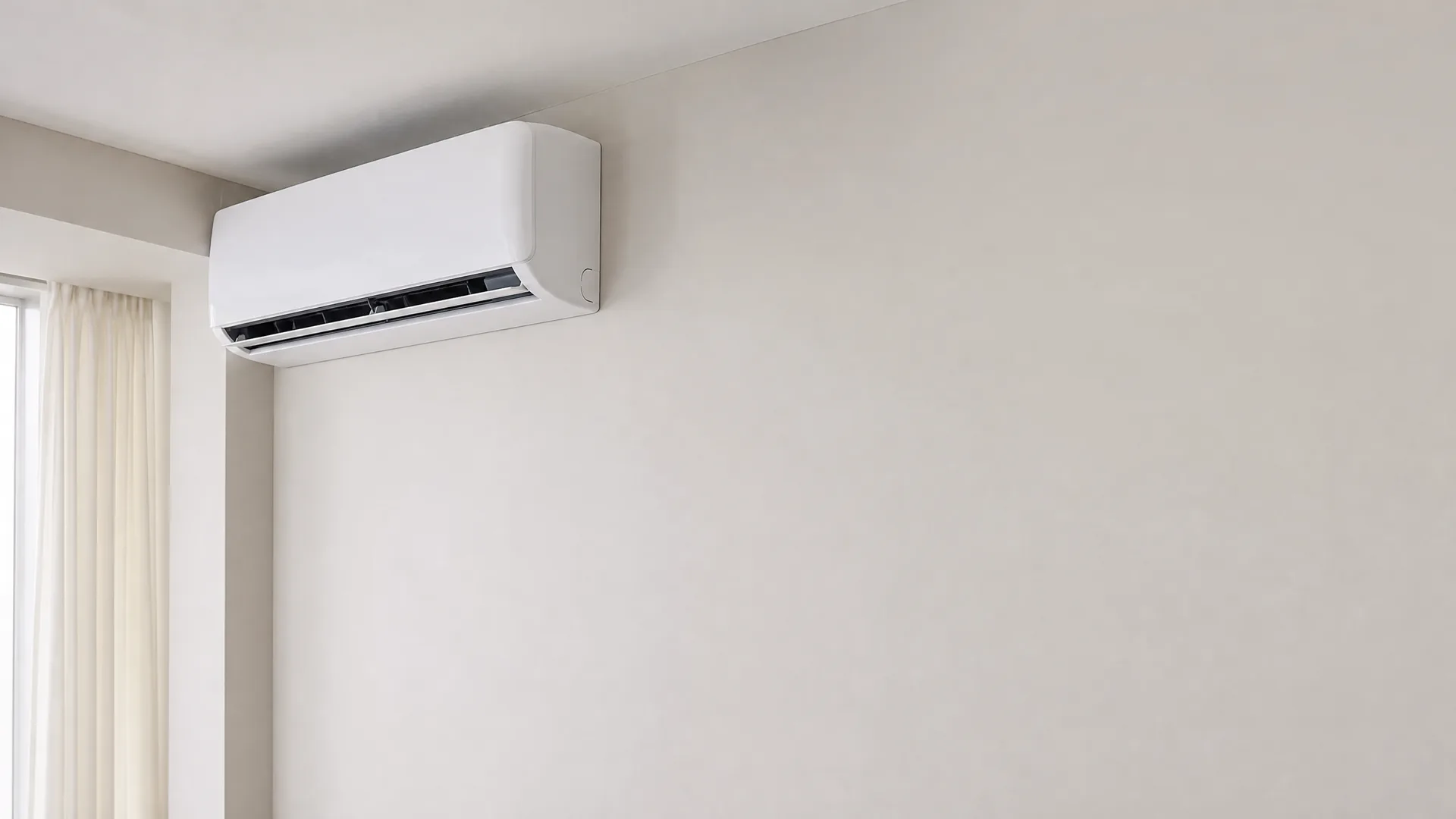
A white wall-mounted mini-split air conditioner near the ceiling of a room with plain beige walls and a pale curtain at the left edge.

How a mini split moves heat

Baseboard heat is pure resistance. Every watt that goes in turns into heat, no more. A mini split's outdoor unit uses electricity to run a compressor that pulls heat from the outside air and moves it inside, so the energy going in produces several times that in heat at the register. That's why a mini split can hold a room warm using a fraction of the power a baseboard would need for the same room.

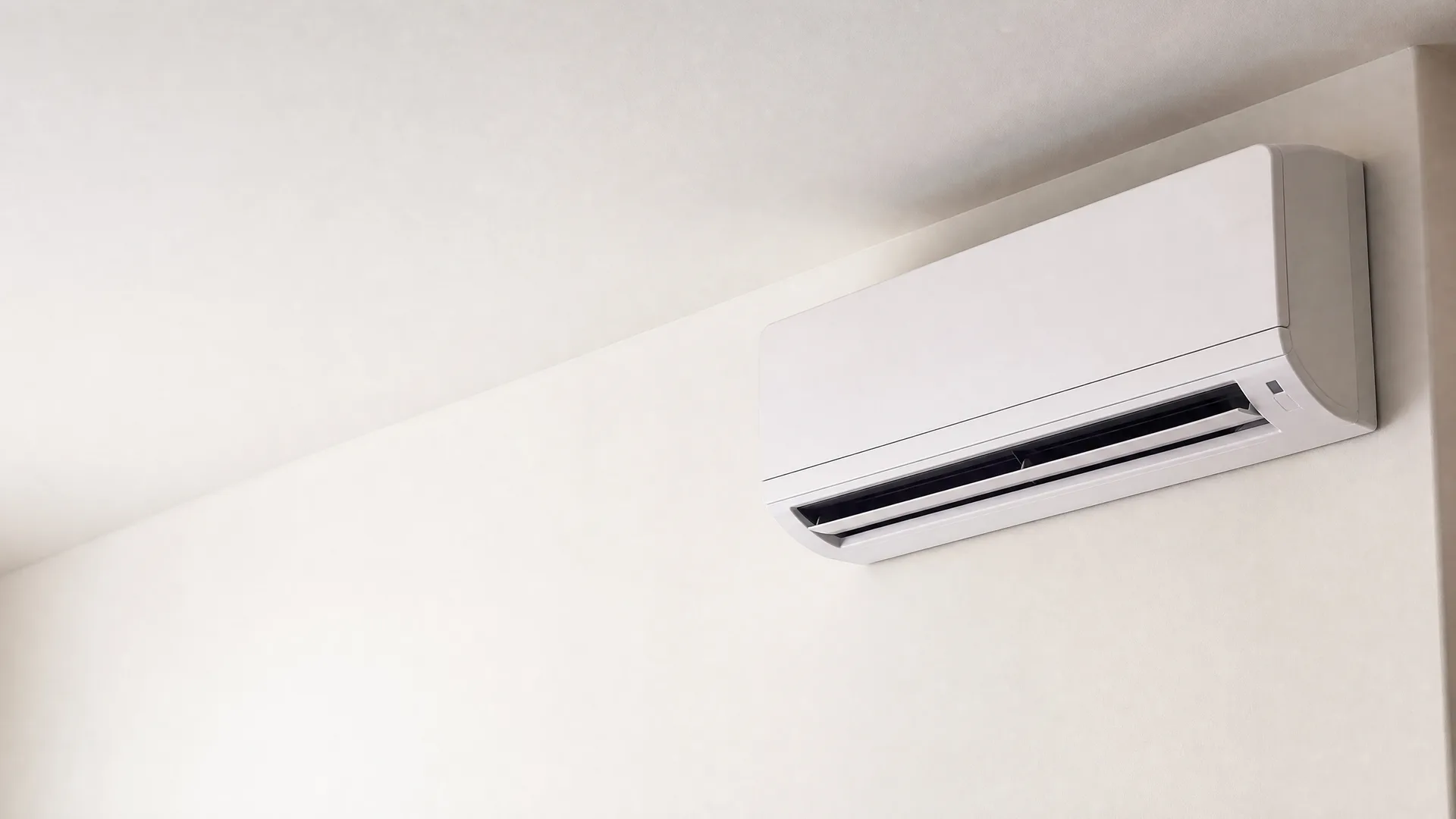
A white wall-mounted mini-split air conditioner indoor unit installed near the ceiling on a plain off-white interior wall.

Where cold weather changes the math

A mini split's advantage over baseboard shrinks as the outdoor air gets colder, because there's less heat outside to pull in. On the coldest Alaska nights, a mini split still outperforms baseboard, but by less than it does in October or April. Some homes keep baseboard heat running alongside the mini split for those stretches, which is worth checking against how your system is set up before you count on the mini split alone.

Does your power bill drop in the shoulder months?

Check the months where the mini split does most of the work without backup, likely September and again in April or May when it's cold but not deep winter cold. If your bill those months is noticeably lower than a comparable month last year on baseboard alone, that's the mini split doing its job. If you don't see much difference, something's off, a unit sized wrong for the room, or one that's running constantly instead of cycling. A mini split that never gets a break during mild weather isn't covering the square footage it's in, and you're paying resistance-heater prices for heat pump equipment.

A white wall-mounted mini-split air conditioner unit installed high on a light gray interior wall below crown molding, with a bamboo-shaded window at the lower left.

Running clean and doing its job

A mini split that looks like this is moving heat the way it should. The filter is clear, so air passes through it without the unit working harder than it needs to. That's where the savings against baseboard heat actually come from.


A wall-mounted mini-split air conditioner indoor unit with a dusty, discolored cover, installed near the ceiling on a plain light-colored wall.

Dust changes the math

A dirty filter and a casing like this mean the unit pulls less air through for the same power draw. It still runs, but it moves less heat per watt. Against Alaska power rates, that gap is what turns a mini split from cheaper than baseboard into a wash.

Mini Split vs Baseboard: Weighing the Costs

Mini Split

  • It moves heat instead of generating it, so it can put out more heat energy than the electricity it uses.
  • Below a certain outdoor temperature, usually somewhere around zero, the unit loses efficiency and leans harder on backup heat.
  • If the outdoor unit ices up or the filter is clogged, it works harder for the same heat and the savings shrink.
  • It only heats the room or zone it's installed in well, so a house heated by one or two units may still need something else for the rest.
  • Installation cost is higher upfront than baseboard, since it needs an outdoor unit, refrigerant lines, and an electrical circuit.

Baseboard Heat

  • Every watt it draws becomes heat, no more and no less, so its output never changes with the weather outside.
  • It costs less to install since it's just a heating element and a thermostat, no outdoor unit or refrigerant lines.
  • With power rates in Alaska among the highest in the country, that straight one-to-one conversion gets expensive to run.
  • It heats evenly room by room if you have a unit in each room, without the range limits of a mini split's zone.
  • It has no moving parts to maintain, no filter to clean and no outdoor coil that can ice up.
A gray-haired, bearded man in a dark coat dusted with snow stands smiling in a dimly lit room with a lamp, mirror, framed art, and a sofa in the background.
An older man with white hair and a beard, wearing a dark snow-dusted coat and scarf, stands in a warmly lit interior hallway with a framed landscape picture, a table lamp and a potted plant behind him, and a snowy view through a window at left.
An older man in a dark snow-flecked overcoat and scarf stands smiling in a warmly lit home entryway, with a glass-paned door showing darkness outside and a lamp-lit room visible through a doorway behind him.
An older man with gray hair and a beard, wearing a dark snow-dusted jacket and scarf, stands smiling in a warmly lit interior hallway with a lit table lamp, a vase of dried branches, and a framed picture in the background.

A pro who works on mini splits

Send the form and stop researching installers for the new mini split.

Sending the form costs nothing.

Baseboard heat costs the same per watt no matter how cold it gets outside. A mini split costs less per watt of heat down to a point, then that advantage shrinks as the temperature drops toward zero.

So the real question is how many hours a winter your outdoor temperature stays above that point. More hours above it means more hours the mini split is actually cheaper than the baseboard.

A woman wrapped in a cream textured blanket sits in an armchair beside a lit lamp and a dark window, with an open book in the foreground.
A smiling older woman with gray hair in a cream knit sweater stands in a dimly lit kitchen beside a window showing snow outside, with a round loaf of bread on the counter in the foreground.

What's Happening Inside the Unit

  • The thermostat calls for heat and the outdoor unit's compressor starts pulling in refrigerant from the outside coil.
  • A reversing valve decides whether the system is moving heat in for winter or moving heat out for summer cooling.
  • Cold refrigerant gas gets compressed, which raises its temperature high enough to give off heat once it reaches the indoor coil.
  • The indoor unit's fan pushes room air across that hot coil, and the warmed air comes out through the head on the wall.
  • Once refrigerant gives up its heat indoors, it cycles back outside as a liquid to pick up more heat and repeat the loop.
  • Defrost mode kicks in automatically when frost builds on the outdoor coil, briefly reversing the cycle to melt it off.

The cycle starts at the thermostat. Once it calls for heat, the compressor in the outdoor unit kicks on and starts pulling in refrigerant from the outdoor coil, even when the air out there is cold. That refrigerant is a gas at this point, and compressing it raises its temperature well above room temperature. A reversing valve is what tells the system which direction to send that heat, in for winter, out for summer, and it's the same hardware doing both jobs depending on the season. The hot gas travels to the indoor coil, and the fan in the wall-mounted head pulls room air across it. That's the warm air you feel coming out. Once the refrigerant gives up its heat to your room, it condenses back into a liquid and heads back outside to start over, picking up more heat from the outdoor air even when that air feels too cold to have much heat left to give. Below a certain temperature, frost forms on the outdoor coil, and the system handles this on its own. It briefly reverses the cycle, sending warm refrigerant outside to melt the frost before switching back to heating your home. You might notice the indoor fan pause or the outdoor unit steam during this, and that's normal operation, not a malfunction. This whole sequence repeats constantly, which is why the system can respond to small temperature swings instead of just switching on and off like a baseboard heater does.

A white wall-mounted mini-split air conditioner installed high on a beige interior wall below crown molding, with a window and light curtain on a black rod at right.
A clean unit like this pulls heat efficiently, which is what keeps it cheaper to run than baseboard.
A wall-mounted mini-split air conditioner indoor unit with a dusty off-white casing and dark lower vent, installed high on a plain light-colored wall below a ceiling molding.
Dust buildup like this makes the unit work harder for the same heat, eating into the savings over baseboard.

Power costs 26.11 cents per kilowatt-hour statewide

At 26.11 cents a kilowatt-hour, every watt your baseboard heat uses costs you directly, with nothing back for it. Your mini split uses the same expensive power, but since it moves heat instead of making it, each watt goes further. That gap is where it earns its keep.

EIA-861 2025 statewide residential average

What happens below zero

When it's genuinely cold, below zero or close to it, a mini split's outdoor unit has to work harder to pull heat from air that barely has any to give. Its output drops and its draw on power climbs. Past a certain point, many systems switch to electric resistance backup to keep up with the heat loss in the house, and that backup works exactly like baseboard does. During those stretches the mini split isn't cheaper than baseboard, it's running the same way baseboard runs. This is where Alaska differs from a lot of places a mini split gets installed. A string of nights in the teens below zero changes the math for however long that stretch lasts.

What a gas furnace changes

Most homes here heat with gas, and that changes what a mini split is actually competing against. Against baseboard, a mini split is almost always cheaper to run because it moves heat instead of making it from pure resistance. Against a gas furnace, the comparison depends on gas rates versus the 26.11 cents a kilowatt-hour power costs here, and a furnace doesn't lose efficiency the way a mini split does when it's cold out. If your house has both a mini split and a gas furnace, the furnace is likely doing more of the work on the coldest nights, with the mini split carrying the milder stretches where it still has the advantage.

A dusty, stained wall-mounted mini-split air conditioner indoor unit near the ceiling on a plain beige wall, with visible lint buildup at its intake grille.
Before you get your mini split installation
A white wall-mounted mini-split air conditioner installed high on a beige interior wall near the ceiling, with a white-framed window at the left edge.
After you get your mini split installation
A two-story house with gray and light gray siding, white-trimmed windows and a white front door, flanked by deciduous trees, with a partly browned lawn in front under a clear blue sky.

Summer here doesn't lean on the mini split the way winter does, but the air still matters to how it runs. Dew point across June, July and August averages 47°F, which is dry. A mini split's indoor coil pulls moisture out of the air as it cools, and dry air like this means it isn't spending capacity wringing out humidity, so what it uses goes toward actual cooling. You'd notice it in a system that cycles off sooner and a room that feels comfortable without feeling clammy. Source: 30-year climate averages for Alaska.

NASA POWER T2MDEW county cells weighted by homes

A mini split costs less than baseboard heat most of the winter, loses some of that edge once it's below zero, and depends on how clean and well matched the unit is to begin with. That's the honest answer. Power here costs 26.11 cents a kilowatt-hour, so the gap between moving heat and making it adds up over a winter even if it narrows in the coldest stretches. Whether that gap is big enough to matter for your house depends on things worth having a contractor actually look at, like whether the unit's sized right and running clean. If you want to know where you stand instead of guessing from your power bill, a local contractor can check the system and tell you straight. Send the form and that part is off your plate. You won't be the one tracking someone down or working the phone to get an answer.

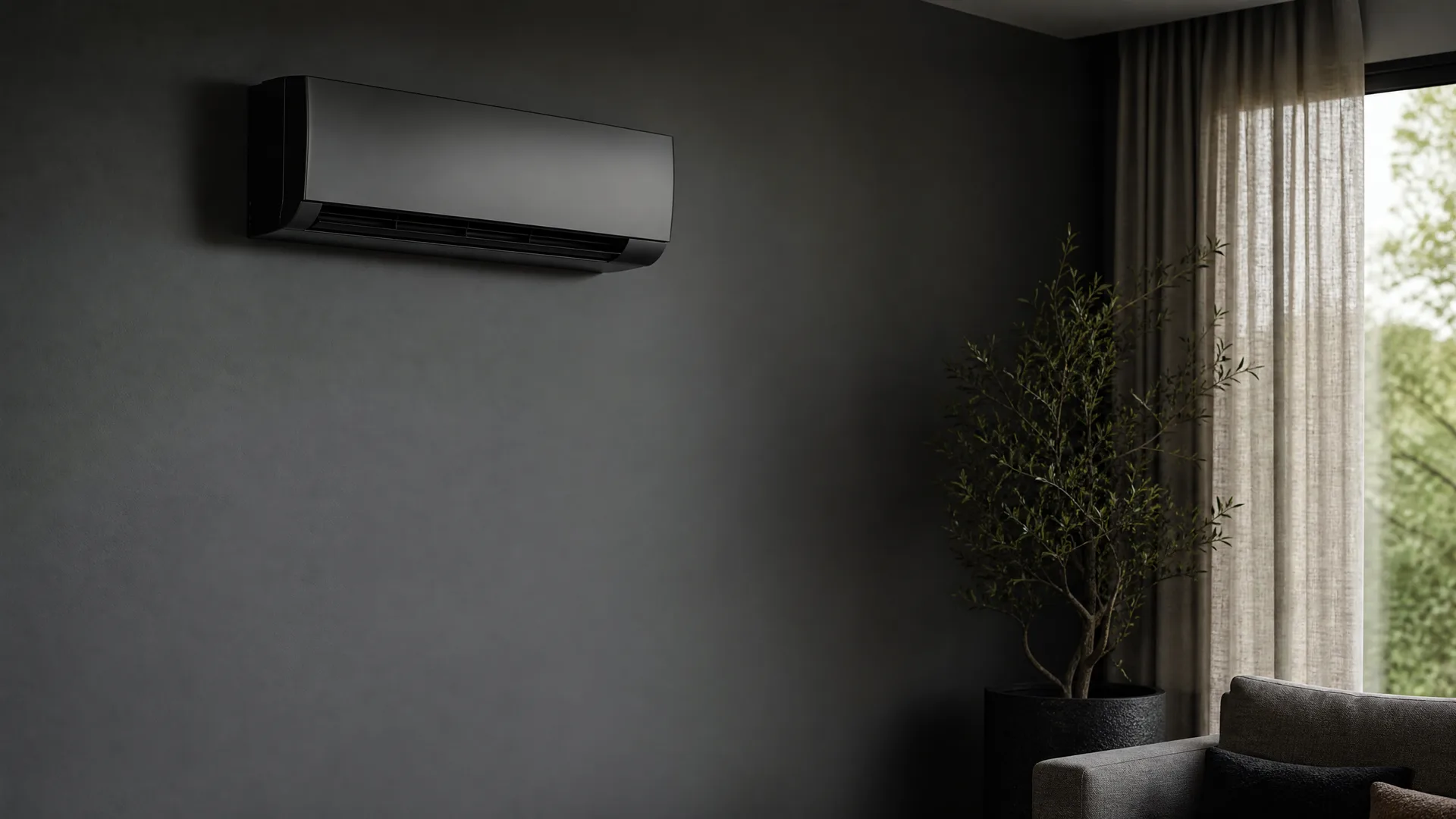
A dark wall-mounted mini-split air conditioner on a gray interior wall, with a potted olive-like tree, sheer curtains over a window showing green foliage, and a gray sofa in the lower right corner.

Get your mini split to the right pro

One request ends the search for a mini split installer.

Step 1 of 3: Equipment