A white wall-mounted mini-split indoor unit on a gray interior wall above a beige sofa, with a framed picture, a floor lamp, wood slat wall trim, and a window showing green foliage.

Matched to your mini split job

What a mini split tune-up covers in Alaska

A tune-up on a mini split means someone checks the coils, the filters, the refrigerant charge and the drain line, then tells you what shape your unit is in. With power costs what they are in Alaska, a unit running clean matters more here than most places. This page covers what gets checked and what it doesn't. Answer a few questions and a contractor who works on mini splits in your area will reach out.

Find my pro

A mini split tune-up covers the indoor and outdoor coils, the filters, the refrigerant charge, the drain line, and the electrical connections, with the contractor clearing out whatever has built up since the last visit and checking that the system is running at the charge it was designed for. Mini splits run outdoors in Alaska winters as well as summer, so the outdoor unit deals with snow, ice, and freezing temperatures the compressor has to work through. A coil that is coated in frost or a filter clogged with dust makes the system pull more power to do the same job, and in a state where power costs this much, that difference shows up on the bill fast. Catching a weak connection or a slow refrigerant leak during a tune-up means it gets handled on your schedule, not in the middle of a cold snap when the unit quits and you need heat right away.

A white wall-mounted mini-split air conditioner installed near the ceiling on a plain beige interior wall.
A clean unit like this one just moves air through a clear filter and a clear coil, nothing fighting it.
A dusty, discolored wall-mounted mini-split air conditioner unit near the ceiling of a plain beige interior wall.
Caked dust and discoloration like this mean the coil can't shed heat right, so the system runs longer to do the same job.

Filters come out first, before anything else gets touched, so the contractor can see what the system has been breathing through. The indoor coil gets cleaned with a soft brush and a fin comb, since a pressure washer or the wrong brush can bend the fins and the unit never fully recovers from that. Refrigerant charge gets checked against the number the manufacturer set for that exact model, not a figure that gets used across every brand. The drain line gets flushed, because a clog there doesn't just stop draining, it backs up and drips inside the house before anyone catches it. Outside, the connections get tightened, since a loose one runs hot and can trip a breaker or burn a wire over months of running. The fan blade on the outdoor unit gets checked too, because leaves and twigs wrap around it even on units whose coil looks clean. None of this is guesswork. It's the same order, every visit, on a unit that has to handle Alaska's dry heat without costing more than it should on a power bill already higher than most of the country pays.

What actually happens during a check

  • The contractor pulls the indoor unit's cover off and slides out the filters to check them before anything else gets touched.
  • A coil cleaned with the wrong pressure or the wrong brush can bend the fins, so the tech uses a soft brush and a fin comb instead.
  • Refrigerant charge gets checked against what the manufacturer specifies for that model, not a general number used across brands.
  • The drain line gets flushed because a clogged one backs up and drips water inside the house before anyone notices.
  • Electrical connections at the outdoor unit get tightened, since a loose one can trip the breaker or burn a wire over time.
  • The outdoor unit's fan blade gets checked for debris wrapped around it, since leaves and twigs collect there even when the coil looks clean.
A woman in a gray turtleneck sweater stands by a window looking outside at snowy ground, with a dimly lit living room containing a sofa, shelves, lamp and a lit candle behind her.
A woman in a cream cable-knit turtleneck sweater stands in a warmly lit living room with a fireplace and shelves behind her, looking out a window toward snow-covered trees and a railed deck.
A woman in a cream knit turtleneck sweater stands by a window looking out at snow, with a lit fireplace, sofa and lamp in the room behind her.
A woman in a gray knit sweater sits by a window looking out at falling snow, with a dimly lit living room containing a sectional sofa, pillows, a lamp and houseplants behind her.

What dirty coils cost you in power

An outdoor coil caked with dust or needles can't shed heat the way a clean one does, so the compressor runs longer to cool the same room. In a place where power costs what it does in Alaska, that difference shows up on the bill every month, not just once. A filter clogged with pet hair or dust does the same thing from the other end, slowing the air moving across the indoor coil. Clearing both is most of what a tune-up does, and it's the part that pays for itself fastest.


Why the drain line gets checked too

The drain line carries off the condensation the indoor coil pulls out of the air, and if it clogs, that water backs up into the unit or drips down a wall instead of outside where it belongs. It's a small line, easy to miss, and algae or debris can block it without any obvious sign until water shows up somewhere it shouldn't. A contractor flushes it clear during a tune-up so it's not the thing that turns into a bigger repair later, which is the whole point of catching problems early.

A bearded man in a plaid flannel shirt stands in a kitchen looking out a window toward snow-covered shrubs, with a steaming mug on the windowsill and potted plants on a shelf behind him.
A smiling man with dark curly hair in a navy t-shirt sits on a gray couch indoors, with a large-leafed plant and a window in the background.

A mini split pro near you

A mini split that sat all winter picks up dust on the blower wheel and in the filters whether it ran or not. Summers here are hot and dry, and a dry climate means the dust is fine and it gets into the coil fins instead of staying in the filter. That buildup is exactly what makes the unit draw more power to cool the same room, and in Alaska that cost lands harder than almost anywhere else. A tune-up catches that before the heat arrives, while the unit still has time to be looked at instead of fixed under pressure. Most homes here heat with gas, so this unit carries the cooling load on its own, with nothing else to share the work if it's not running right. Getting it checked now means one less thing to track down once the heat sets in and the system is already working hard.

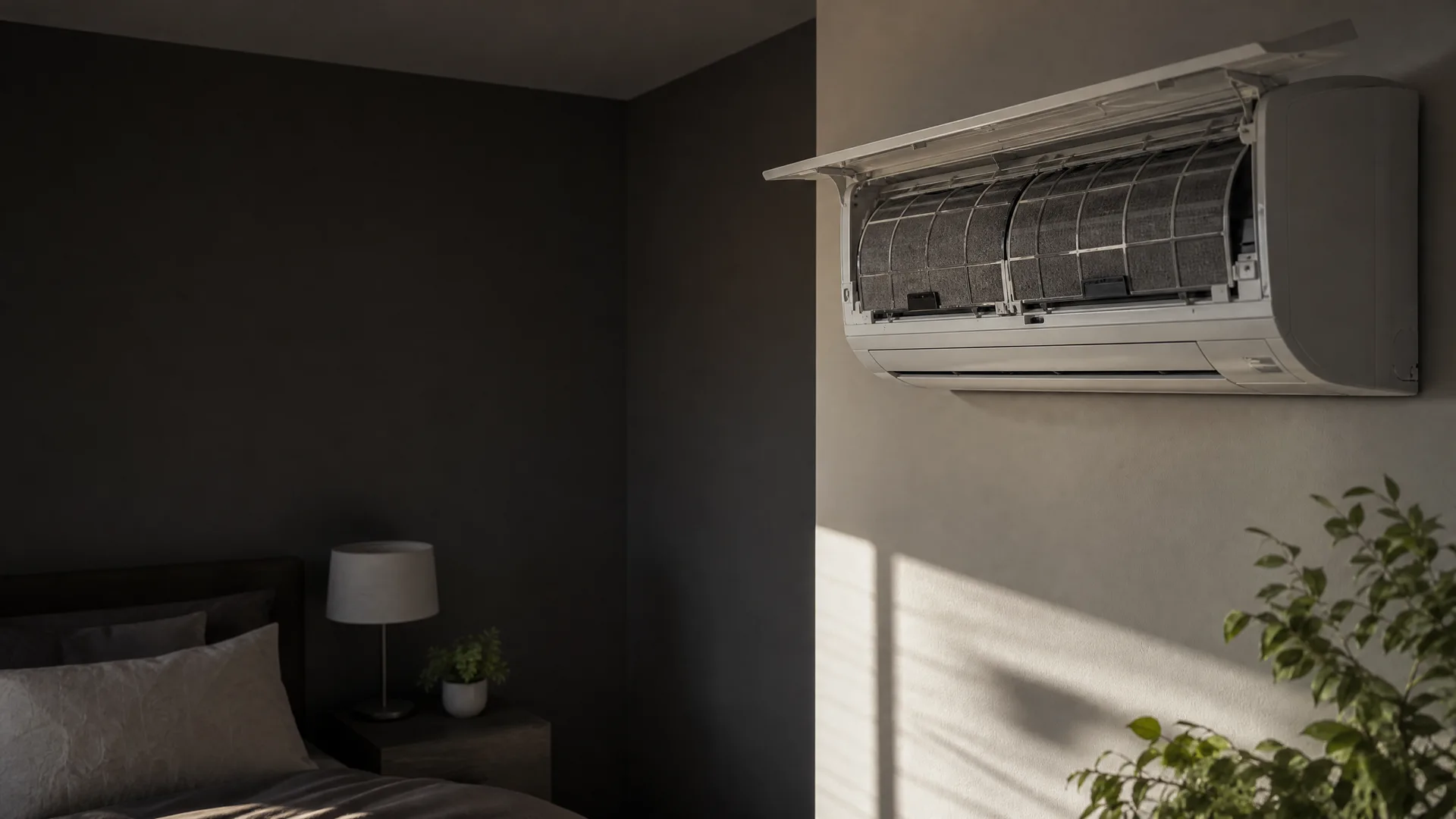
A wall-mounted mini-split air conditioner with its front cover open exposing the filters, in a dim bedroom with a bed, nightstand lamp and a potted plant.

Spring sun comes in low through the bedroom window, and you finally get around to the mini split you've been meaning to look at since winter let go. The cover lifts off easy, the two clips giving way with a little plastic creak. Behind it, the filter screen is grey with dust, matted enough that you can't see the mesh underneath in places. You hold it up to the light from the window and nothing comes through. Dry as it's been the last few summers here, you figured something was collecting in there, but seeing it is different. You set it on the dresser, meaning to rinse it in the sink before you put the cover back on, and wonder what the coil behind it looks like.

Tune-Up Now or Wait and See

Tune-Up Now

  • A contractor can catch a weak capacitor or a clogged drain line before it strands you without cooling on a hot, dry stretch.
  • You pick the day and the time, so the work fits around your schedule instead of the system's failure.
  • A technician working on a unit that's still running can compare today's readings to how it should perform, not guess from a dead system.
  • Clearing dust from the coil now keeps the compressor from working harder than it needs to, which matters with what power costs in Alaska.
  • Small problems like a dirty filter or a loose electrical connection get fixed while they're still small and cheap to fix.
  • You get a straight read on the unit's condition from someone looking at it before anything forces the issue.

Wait for a Problem

  • You skip the tune-up cost today, but a unit running dirty keeps drawing more power every day it goes unchecked.
  • A refrigerant leak or a failing part usually shows up as reduced cooling first, which is easy to write off as just a hot day.
  • By the time the system won't turn on, you're booking a repair on the contractor's schedule, not yours.
  • A coil that's been caked with dust and buildup for a season takes more to clean or may have already lost some efficiency for good.
  • Waiting means you find out something's wrong the same day you need the cooling most.
  • A problem caught late sometimes means replacing a part that could have just been cleaned or adjusted.
A single-story house with gray vinyl siding, dark shingled gable roofs, and white-trimmed windows, set behind a partly dry green lawn under a clear blue sky.

Summer air in Alaska carries a dew point of 47°F, averaged across June, July and August from local weather data. That's dry air, and dry air pulls moisture out of everything, including the thin film that should sit on your mini split's coil. Without that moisture, dust doesn't stick where it's supposed to. It drifts past the filter and settles straight onto the coil fins instead. You won't see it from across the room. What you'll notice is the unit running longer stretches to cool the same space, because a coil dusted over can't shed heat the way a clean one does. A tune-up catches that buildup before it costs you on the power bill.

NASA POWER T2MDEW county cells weighted by homes

A wall-mounted mini-split air conditioner indoor unit with a discolored cream plastic casing and dusty outlet vanes, installed high on a plain light-colored interior wall near the ceiling.
Before you get your mini split maintenance
A white wall-mounted mini-split air conditioner installed high on a beige interior wall near the ceiling molding, with a light curtain and curtain rod at the left edge.
After you get your mini split maintenance

No tune-up this year

The filters stay dirty and the coil keeps losing its grip on heat. The unit runs longer to cool the same room, and on Alaska power rates that shows up on the bill.

Connect with a pro

Tune-up this year

Someone checks the coils, the filters, the charge and the drain line, and tells you what's worn before it fails on a hot, dry stretch.

Connect with a pro

Power costs 26.11 cents per kilowatt-hour statewide

At 26.11 cents a kilowatt-hour, a mini split working harder than it should costs you more than it would most other places. A tune-up keeps the coils and filters clear so the unit isn't drawing extra power just to hold a room at temperature.

EIA-861 2025 statewide residential average

A white wall-mounted mini-split air conditioner unit installed high on a light gray interior wall near the ceiling, with a white-framed window and green foliage visible at the left edge.

Running the way it should

Air moves through the vents without a sound catching your ear. The room holds its temperature, and the unit cycles off instead of grinding through the afternoon to keep up.

A dusty white wall-mounted mini-split air conditioner installed high on a beige interior wall below a molded ceiling trim.

Carrying a winter's worth of dust

The panel hangs open and the filter underneath is gray with buildup. Dust like that works into the coil fins behind it, and a coil that can't shed heat makes the compressor run longer than it needs to.

A smiling man in a denim shirt and white t-shirt stands in an open dark doorway of a stucco house, facing a woman with long brown hair and a green jacket seen from behind in the foreground.

What a mini split tune-up covers

A tune-up means a contractor goes through the coils, the filters, the refrigerant charge, and the drain line, and leaves the unit running the way it was built to run. That's the whole answer. Nothing hidden in it, nothing that needs a technician on site to explain further.

Where you go from here is up to what you noticed before you searched this. If something about your unit has been nagging at you, a form on this page gets you matched with a contractor who takes it from there, and they'll reach out to you directly. You won't be the one tracking down who's available or chasing a callback. That part stops being yours to carry.

Interior corner of a room with a window and sheer curtain at left, a gray upholstered sofa with a cushion at right, and a round wooden table holding stacked books and a round vase with an olive branch.
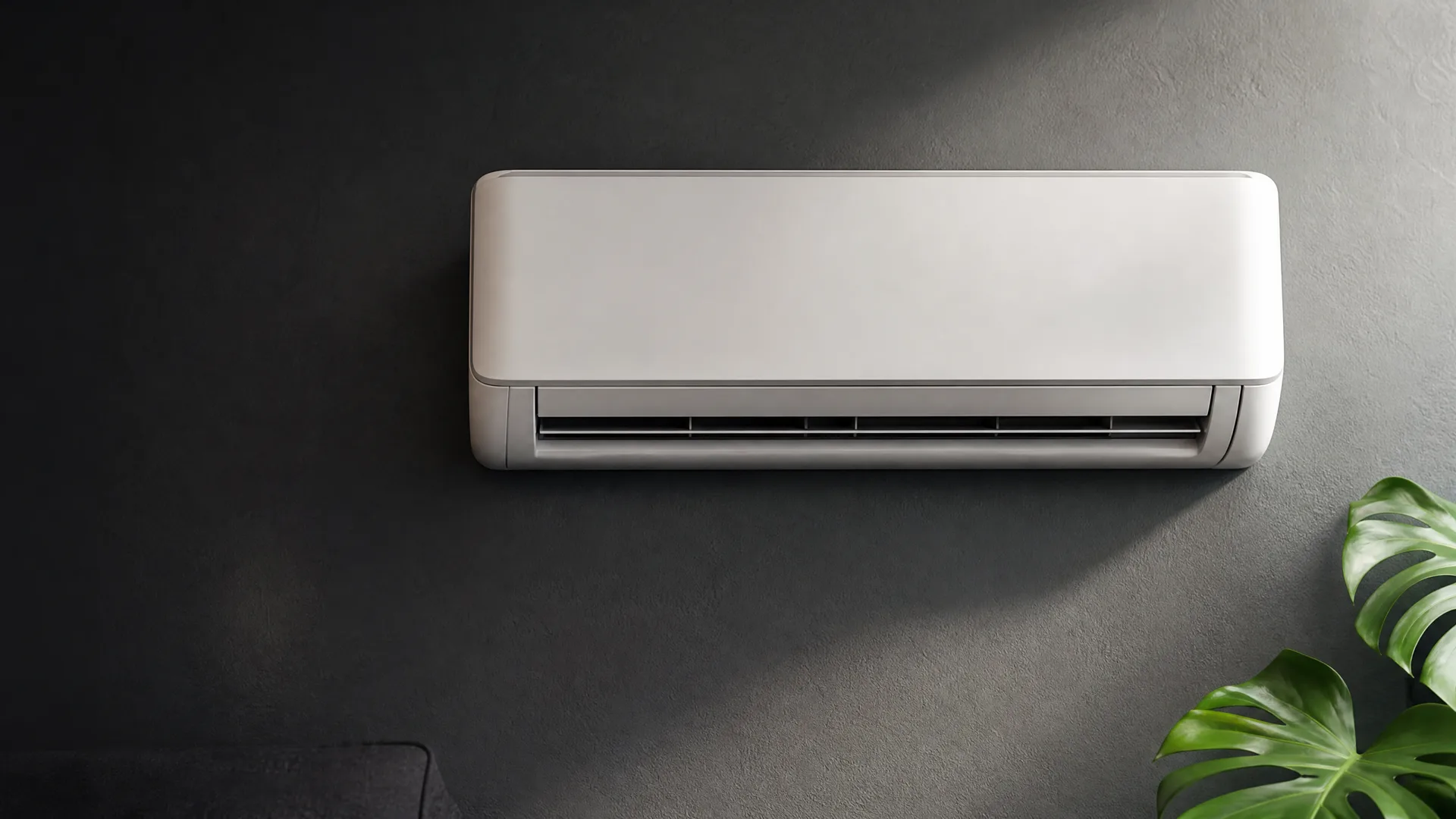
A white wall-mounted mini-split air conditioner on a dark grey textured wall, with a monstera plant leaf at the lower right corner.

Get the right pro for your mini split

Step 1 of 3: Equipment