Why your mini split blows cold air in Alaska

Step 1 of 3: Equipment

A mini split that blows cold air when it should be heating usually means it's stuck in cooling mode or defrost. Check the remote or wall control first. It's easy to bump the mode button and not notice, especially if more than one person in the house uses it. If the mode is right and cold air is still coming out, the unit may be running a defrost cycle, where it pauses heat to clear frost off the outdoor coil before switching back. That's normal for short stretches in cold weather, but if it keeps happening or never switches back to heat, something in the system isn't working the way it should. A reversing valve stuck in the wrong position will do this too, and that's not something you can fix by changing a setting. Left alone, a mini split stuck in the wrong mode will run and run without actually warming the rooms you're trying to keep warm.

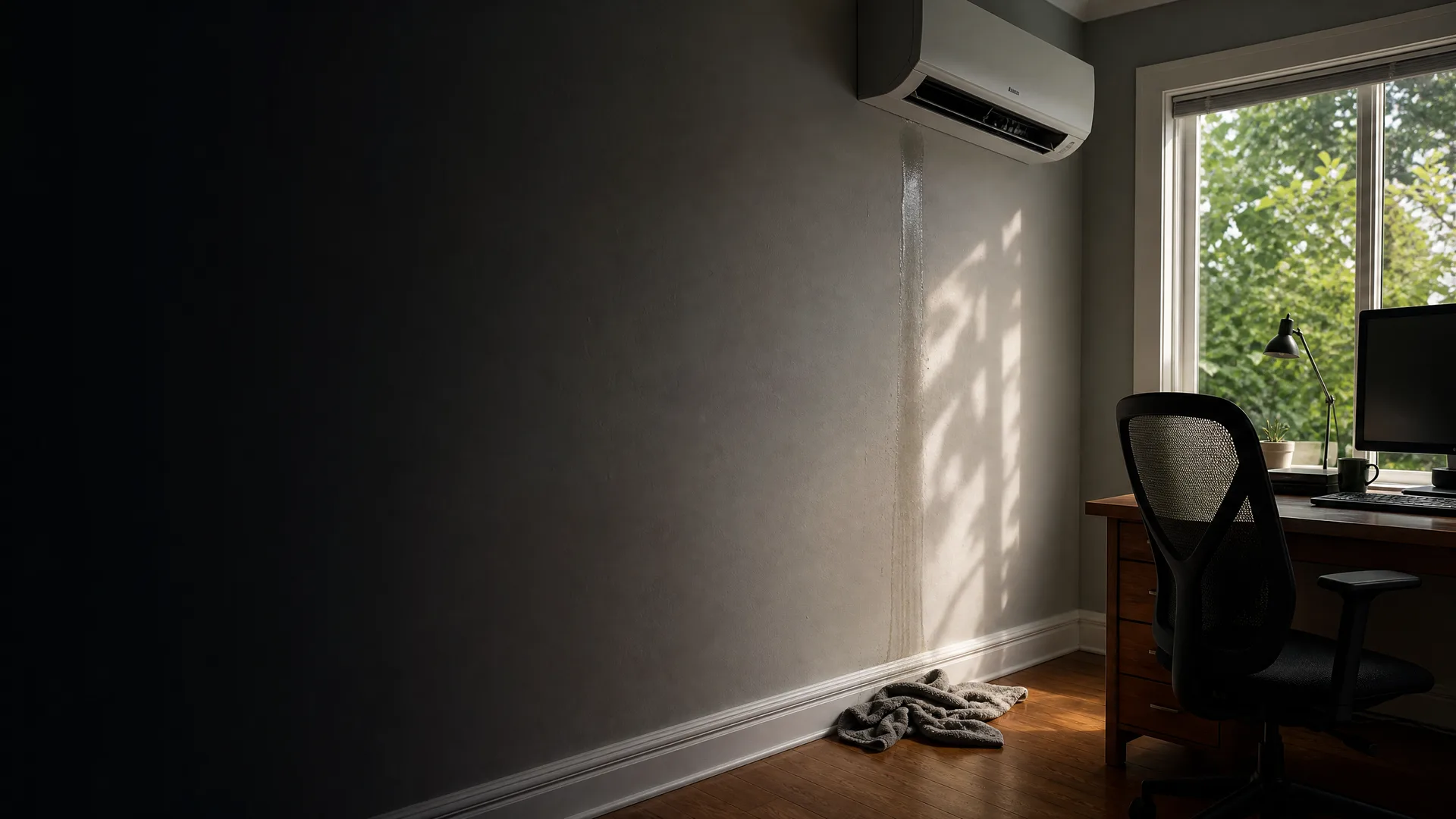
A wall-mounted mini-split air conditioner in a dim room, with a water streak running down the wall below it to a towel on the floor near the baseboard, beside a desk, office chair and monitor by a window.

You're at the desk in the home office, working through the afternoon while the sun sits high outside. The mini split on the wall is supposed to be cooling the room, same as every dry summer afternoon, but something's off. A dark streak has worked its way down the wall under the indoor unit, and you've already pulled a towel over from the bathroom to catch what's dripping. The air coming out still feels cool, maybe too cool, like the unit's running flat out and getting nowhere. You stand there a second, towel underfoot, trying to figure out if this is the same thing as the cold air problem or something else going wrong at the same time.

Why does my mini split blow cold air when it's set to heat?

Your mini split is set to heat, but what's coming out of the vent feels cold, maybe even cold enough that you've gone back to check the remote twice. In Alaska, where most homes lean on gas for heat and the mini split is often doing lighter duty work in the shoulder months, this catches people off guard because the unit still looks like it's running fine.

It's likely still in defrost, not actually malfunctioning

A mini split pulls heat from the outdoor air even when it's cold out, and frost builds up on the outdoor coil as it runs. Every so often the unit has to stop heating, reverse itself briefly, and melt that frost off before it can keep going. During that cycle, which usually runs ten to fifteen minutes, the indoor head can blow cool or room-temperature air instead of warm. That's normal and it should switch back on its own. If the cold air lasts well past that, or the outdoor unit has heavy ice that isn't clearing, something in the defrost cycle itself isn't working right, and that's a repair a licensed technician needs to look at rather than something to wait out.

A white wall-mounted mini-split air conditioner installed near the ceiling on a light-colored interior wall, with a window and green foliage visible at the left edge.

Mode set right

This is a mini split doing its job, pulling warm air out on a dry afternoon while the sun sits outside the window. The control is on the setting you meant to use. Nothing's blowing cold when it should be blowing warm, or the other way around.

A dusty white wall-mounted mini-split air conditioner indoor unit installed high on a beige interior wall below a white ceiling and trim.

Grime builds up

Dust has packed into the vents and the lower grille until you can see it from across the room. A coil that dirty can't move heat the way it should, in either direction. Left alone, it's one more reason the unit struggles to keep up, on top of whatever's wrong with the mode.

Why does the room still feel cold with the heat running?

You've got the mode set to heat, the unit's running, and the room still isn't warming up. Maybe you're layering up indoors, or the thermostat in the next room over keeps clicking the gas furnace back on to cover for it. You might hear the mini split cycling normally, no odd noises, just air that never turns warm. Some households notice it only in one room, the one with the mini split, while the rest of the house stays fine on gas heat. Left alone, you're paying for power that isn't doing its job, and power here isn't cheap to waste.

A woman with long light-brown hair in a gray knit sweater sits in a living room looking off to the side, with a sectional sofa, houseplant, lamp, wooden table and large windows behind her.
A woman in a chunky gray turtleneck sweater sits indoors looking off to the side, with a blurred dining table, chairs, pendant lamp and window behind her.
A woman in a cream knit sweater with her hair in a bun stands near a window, looking off to the side, with a gray sofa, houseplant and open kitchen with pendant lights blurred behind her.
A woman with long brown hair in a cream knit sweater stands near a window, looking to the side, with a white sofa, shelving, and a hallway visible behind her.

No phone calls to make

A mini split that won't heat right is one more thing competing with the gas furnace most homes here already lean on, and power in Alaska costs enough that nobody wants a unit running without doing its job. Sorting that out yourself means searching for someone who works on mini splits specifically, calling a few, describing the cold air and the mode settings you've already checked, then doing it again for the next company and comparing what each one quotes. A local contractor who services this equipment every season has likely seen this exact complaint before, the heat setting that blows cold, and knows which few things cause it on these units. Your request goes to one contractor, not a handful, so you're not fielding five calls about the same problem. That's less back and forth for you, and someone looking at the actual unit on your wall instead of guessing over the phone.

Why defrost mode feels like cold air

When a mini split heats in cold weather, frost builds on the outdoor coil. The unit has to stop and run a reverse cycle to melt it off before it can keep heating. During that cycle, the indoor fan either shuts off or blows cold air for a few minutes while the system clears the coil outside. It looks like a malfunction from inside the house, but it's the unit doing maintenance on itself. Once the coil is clear, it switches back to heating and the air warms up again. If this happens once every hour or so in cold weather, that's the system working as designed, not failing.

When the pattern points to a real fault

Defrost cycles are supposed to be short, a matter of minutes, then heating resumes and the room warms back up. If the unit stays in that cold-blow state for much longer, or never comes back to heating at all, something else is wrong. A stuck reversing valve can leave the system running backward no matter what the control says. A refrigerant leak can keep the outdoor coil icing over faster than the unit can clear it. Either one needs a contractor with gauges and the right tools to find, since nothing on the wall control will tell you which one you're dealing with.

A woman with her hair in a bun holds a sleeping young child against her chest, both wrapped in a textured beige knit blanket on a sofa in a dimly lit room with a lamp, framed picture, and bookshelf behind them.
An older woman with gray hair in a bun and glasses, wearing a beige knit sweater, smiles while looking to the side in a warmly lit kitchen, with a loaf of bread on the counter in the foreground and a snowy scene outside the window.

Power costs 26.11 cents per kilowatt-hour statewide

At that rate, a mini split stuck blowing cold air isn't just an annoyance, it's a unit pulling power while it fights itself instead of heating. If yours is caught in a cycle it can't get out of, you're paying for electricity that's doing nothing for the room.

EIA-861 2025 statewide residential average

A wall-mounted mini-split air conditioner indoor unit with a yellowed plastic casing and dark horizontal vent louvers, installed on a plain light-gray wall.
Before you get your mini split repair
A white wall-mounted mini-split air conditioner on a light gray wall in an empty room with dark wood flooring, white baseboards, a tray ceiling with recessed lights, and a window at the left.
After you get your mini split repair
  1. A sensor in the outdoor unit detects frost building on the coil.

  2. The reversing valve flips, sending hot gas backward through the system.

  3. The outdoor fan stops while the coil sheds ice.

  4. The indoor fan shuts off or slows so cold air doesn't blow inside.

A closed silver laptop and a ceramic mug of dark coffee sit on a wooden table in front of two chair backs, with a kitchen counter, tiled backsplash, wooden cutting boards, a vase of greenery and a potted plant by a window behind.

A mode setting, a frost cycle, or something that needs a tech

Most of the time, cold air from a mini split that's set to heat comes down to one of three things. The mode got bumped to the wrong setting. The unit's in a defrost cycle that hasn't finished yet. Or something in the system, the reversing valve, a sensor, the refrigerant charge, isn't doing what it should, and the unit needs a technician to find out which. Check the control first. If the setting's right and the cold air doesn't let up, it's not something you can fix by waiting it out.

Tracking down someone who works on mini splits, explaining what's happening, then doing it again for the next company while you compare quotes takes time you'd rather spend keeping the house warm. A local contractor who services this equipment all year has likely seen this exact complaint before, in a house not far from yours, and knows what to check first.

A gray upholstered sofa with a matching cushion sits beside a potted plant and a wooden table holding a small green plant in a stone pot, near a curtained window.
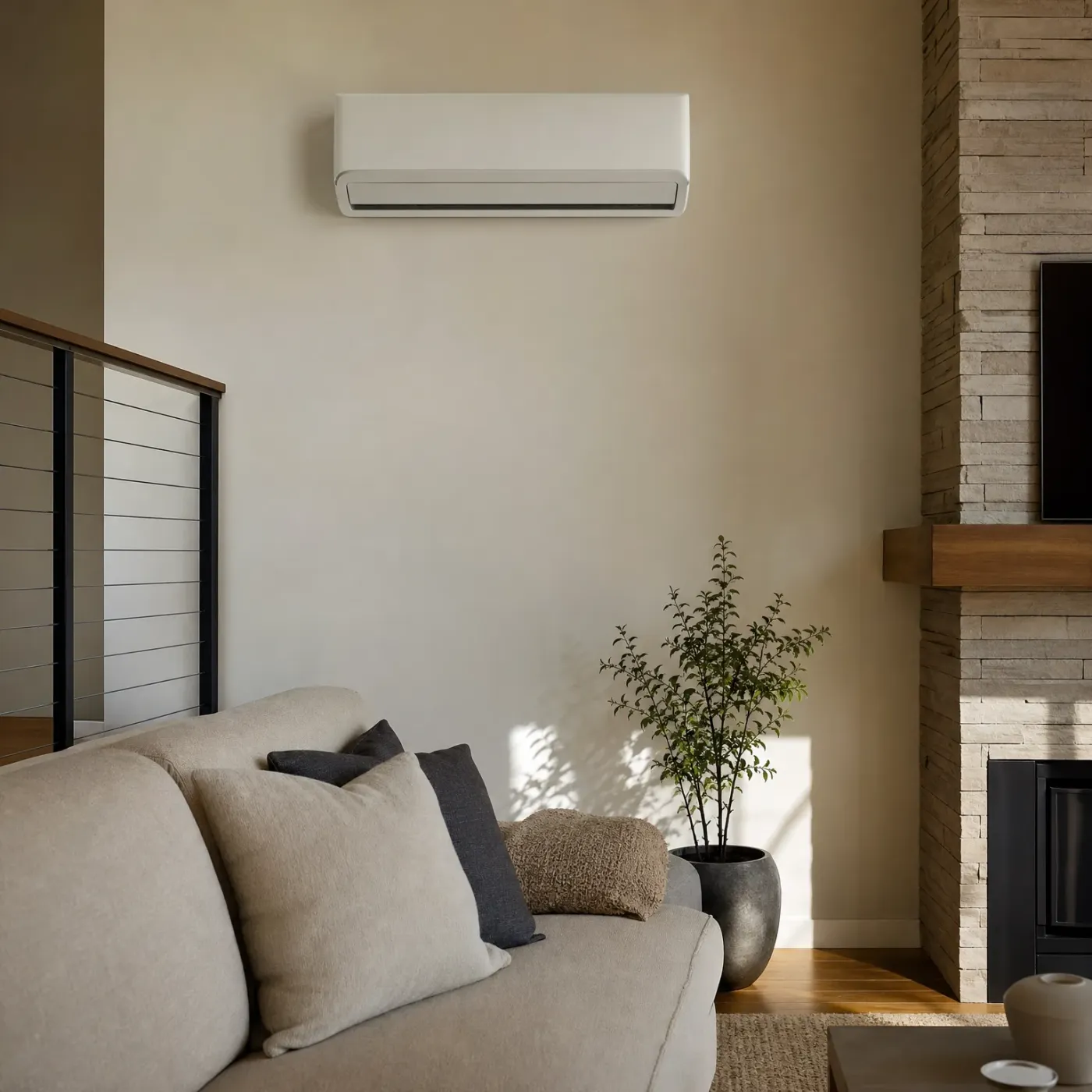
Interior living room with a white wall-mounted mini-split air conditioner high on a beige wall, a light gray sofa with cushions, a potted small tree, a stacked-stone fireplace with wood mantel and mounted TV, and a cable railing at left.

One form, no calling around

Fill out one form

Your request goes to one pro, not a list of companies.

No fee to send it, and nothing to sign.